Tuesday, 25 October 2022

My predictions for Red Dead Redemption 3

 Red Dead Redeption 2 came out four years ago, and since then articles guessing what direction the franchise will take have been popping up in my news feed. None of them ever seem to agree with my assumptions, so I thought I’d jot them down. This way, in the unlikely event that I am right, I can say “I told you so.” (Not just me, of course)

Oh, and spoilers ahead for RDR1 and 2.

Prequel or sequel?

Some writers have suggested that the most obvious choice for RDR3 would be to follow the story of Jack Marston. This would be great, and I'd love to see Rockstar do a game set during the Jazz Age but since RDR2 is a prequel to RDR1 then it would make sense for the third game to follow the pattern.

Also, I think that the story for RDR3 is largely already written and some of the footage already shot. In one interview the actor Peter Blomquist, who plays Micah, describes a hidden scene in which Micah and the gang leader Dutch dance together. Since that scene still isn’t found after four years, I suspect it has been removed and is meant for RDR3. And because we know Micah dies at the end of RDR2, it must be a prequel. Similarly, the end of the third trailer for RDR2 shows the town of Limpany on fire, but in the game itself the town is already a burnt out husk and nothing ever happens there at all.

All of this implies that RDR3 would be a direct prequel, with events leading up to the beginning of RDR2.

Gravestones give clues to some characters we might meet,
if RDR3 is set immediately before RDR2


Main Protagonist?

Since the main protagonist dies at the end of RDR1 (John) and RDR2 (Arthur) then we could reasonably assume the same will happen in RDR3. We have two possible candidates: Davey and Jenny who both recently died when the game begins.

I think Jenny is the most likely of the two, simply because we never see her body so we know little about her. She is sometimes mentioned in dialogue between gang members throughout the game which makes me think that her backstory is better understood by the writers than Davey's story.


Storyline?

If Jenny is the protagonist, then one would assume that feminist issues (the right to vote, domestic abuse) would feature strongly. But I’m inclined to think that because we never see her* that she could well be black or mixed race. This would imply that RDR3 will focus on slavery or, to be more exact, about peony if we bear in mind that RDR3 would probably be set in the mid-1890s. Peony was the method used after the legal abolition of slavery to keep poor workers (largely black) in low-paid work with few rights.


Epilogue?

At the end of RDR2 there is a lengthy epilogue and the chance for the player (as John Marston) to free roam around the map, occasionally completing any unfinished missions that aren’t story-specific. We know from dialogue in RDR2 that John goes missing at some unspecified time in the past and he isn’t part of the gang at the very start of the game. This would allow, after the story of RDR3 is told, for the player to take up the character of John and free roam for as long as they please.


Map size?

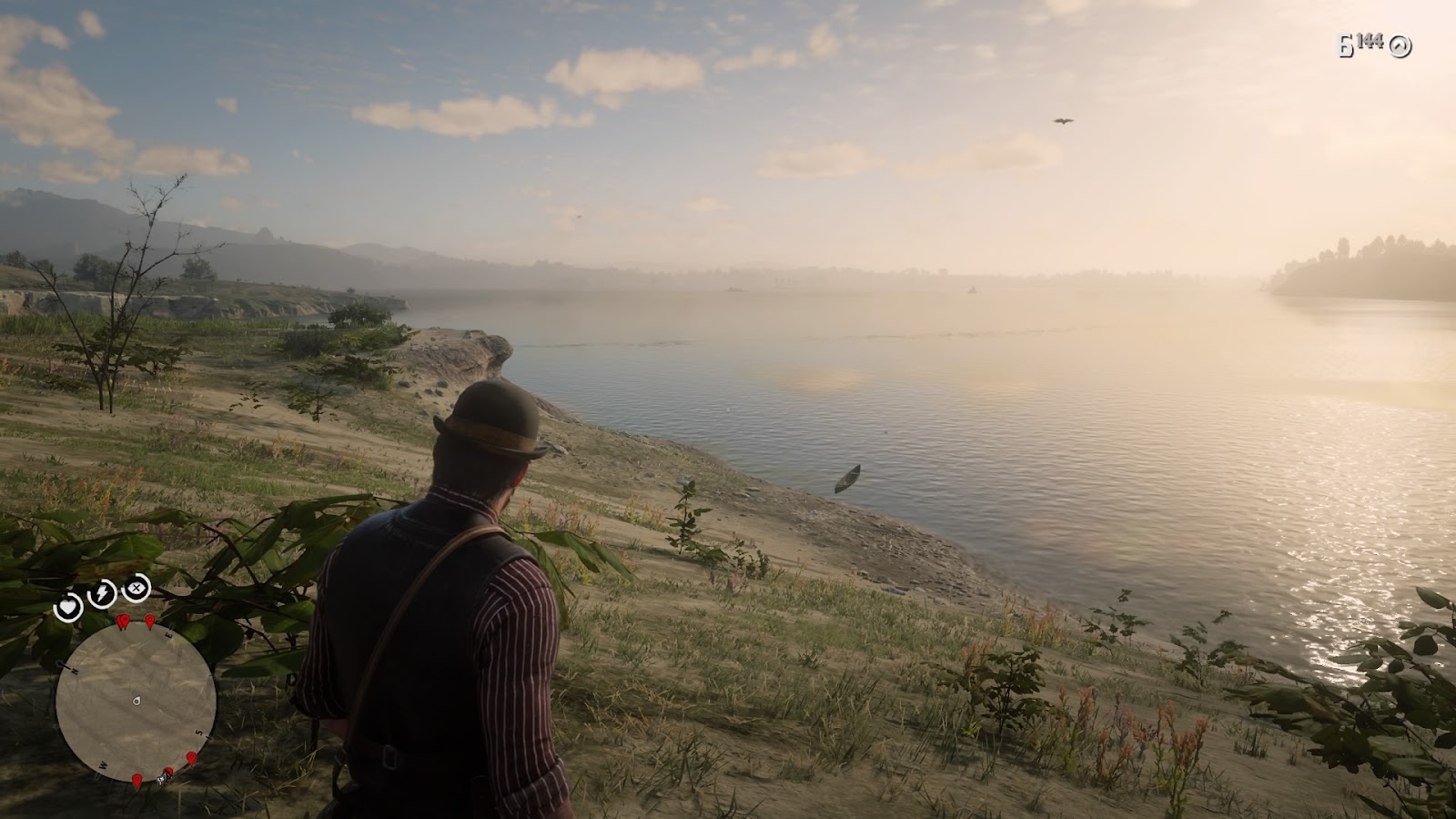
This is tricky. In RDR2, water acts as its southern border, but it has been discovered that there is a “slip zone” south of Flat Iron Lake, indicating that it was once part of the main game too. There are rowing boats, too, on the southern shore even though there is no legitimate way of getting there.


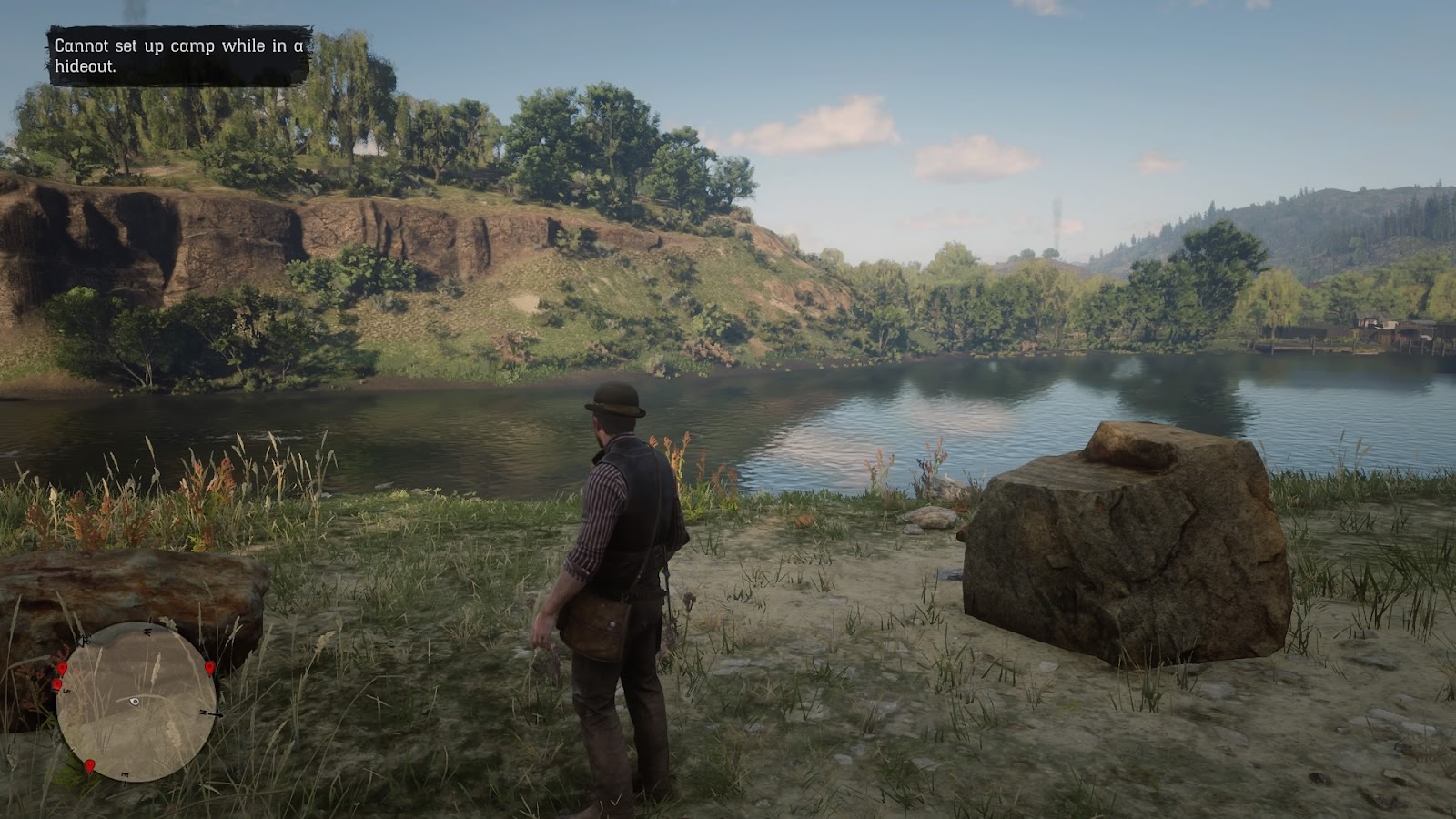
I have found two areas across the river from Thieve's Landing which are marked as hideouts, which is obviously the remains of some mission that had been removed. 


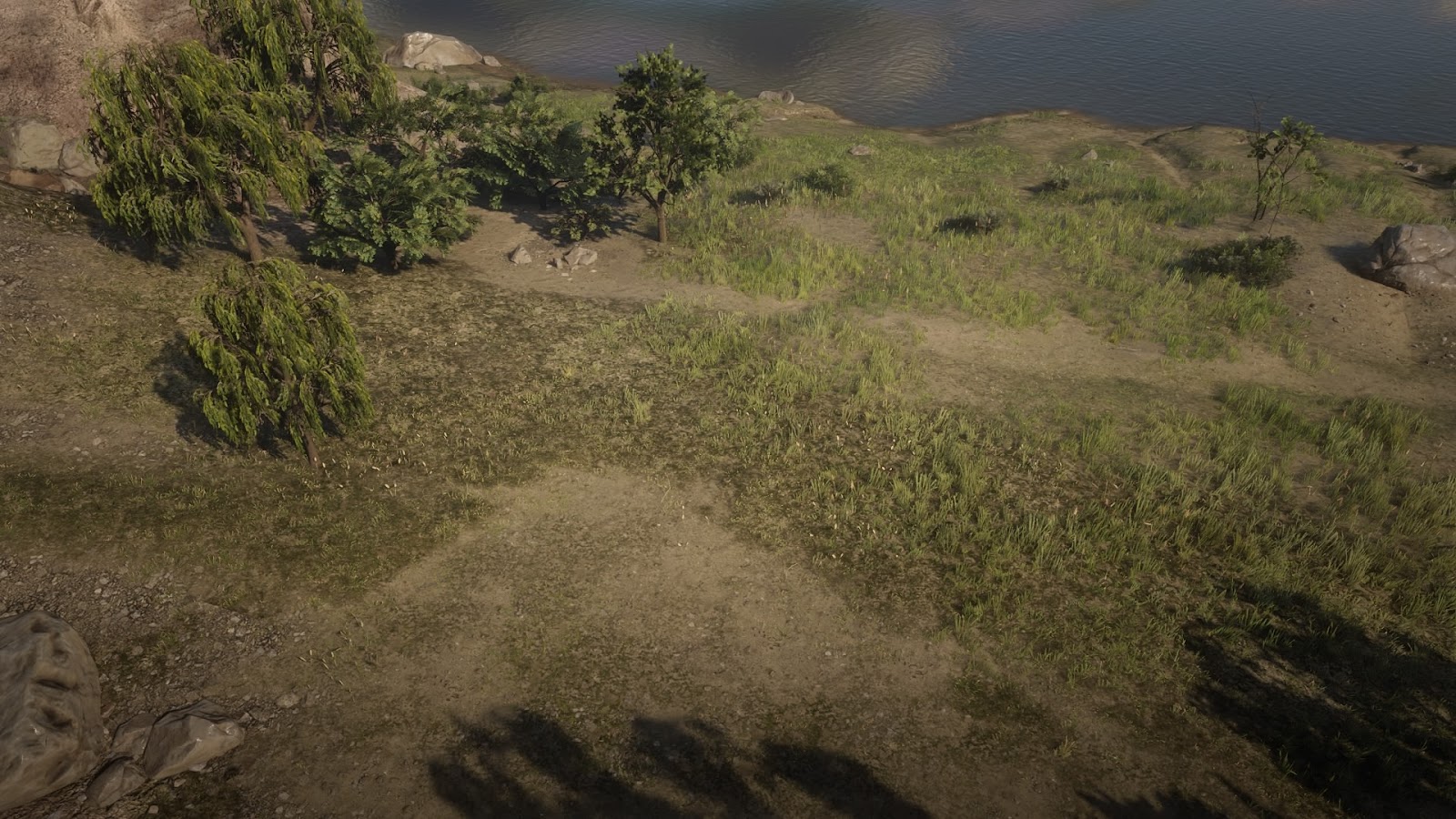
Also, further along the coast, is a right angled patch of discoloured ground which might have been part of a yard, indicating that a settlement was once going to be here. 


Finally, there is an area opposite Annesburg with a large number of wolves and cougars which I wonder might have been part of a challenge to kill them off before the gang was able to set up camp there.

All of these may be reinstated in RDR3. Or they may not. Either way, I expect RDR3 to have Flat Iron Lake more central in the map.

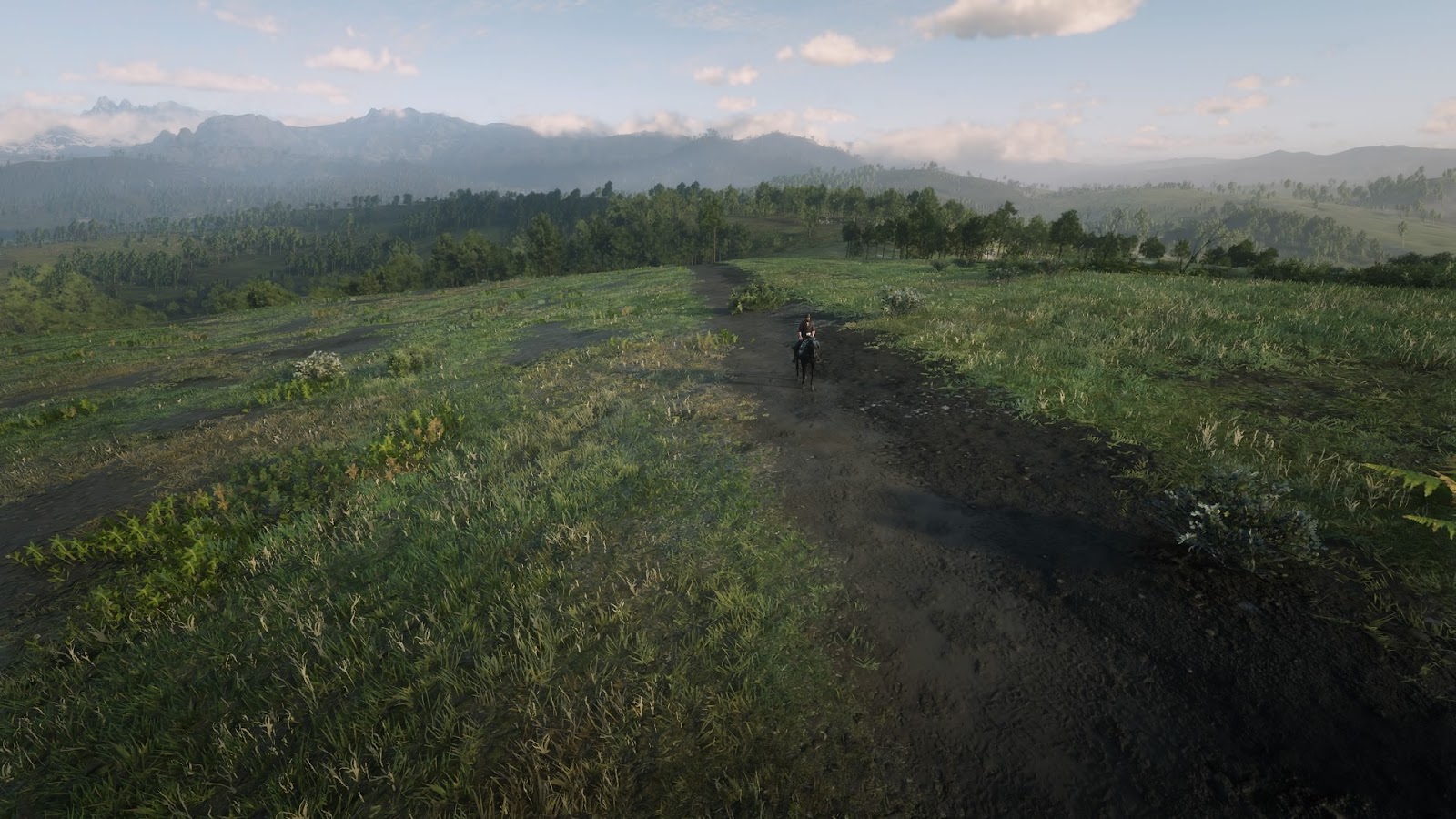
Beyond the “slip zone” the map continues for far longer than is needed. I’ve explored a lot to the south and east and there’s nothing more to suggest that this was ever going to be part of the game, apart from a dirt road that leads from a forest and up a hill but otherwise serves no discernible purpose.


Release date?

No idea. Sorry.


* there is a sketch of her in Arthur's notebook which shows she has long dark hair, which would suggest white or Native American or South Asian. But equally, there are mentions of Lenny (who is black) having been in love with Jenny and, in 1899, a mixed-ethnic relationship between races would have attracted more comments about the racial aspect but in the game there are none, which makes me suppose that Jenny had dark skin. Her surname, Kirk, suggests some Scottish family or Scottish owners.

Thursday, 8 September 2022

Have you been in a ganzfeld experiment?

 My new project is a book about ganzfeld experiments in psi research. I'm keen to avoid yet another telling of the debate over the various meta-analyses and instead want more about the people involved. As such I'm looking for anyone who's participated in a ganzfeld psi experiment, either as an experimenter or judge, sender or receiver. If you're happy to answer a few questions about it by email, then please drop me a line at in_the_ganzfeld@outlook.com

Many thanks in advance.

Andrew

Sunday, 14 August 2022

The curious case of Charles Brewin and Frank Johnson

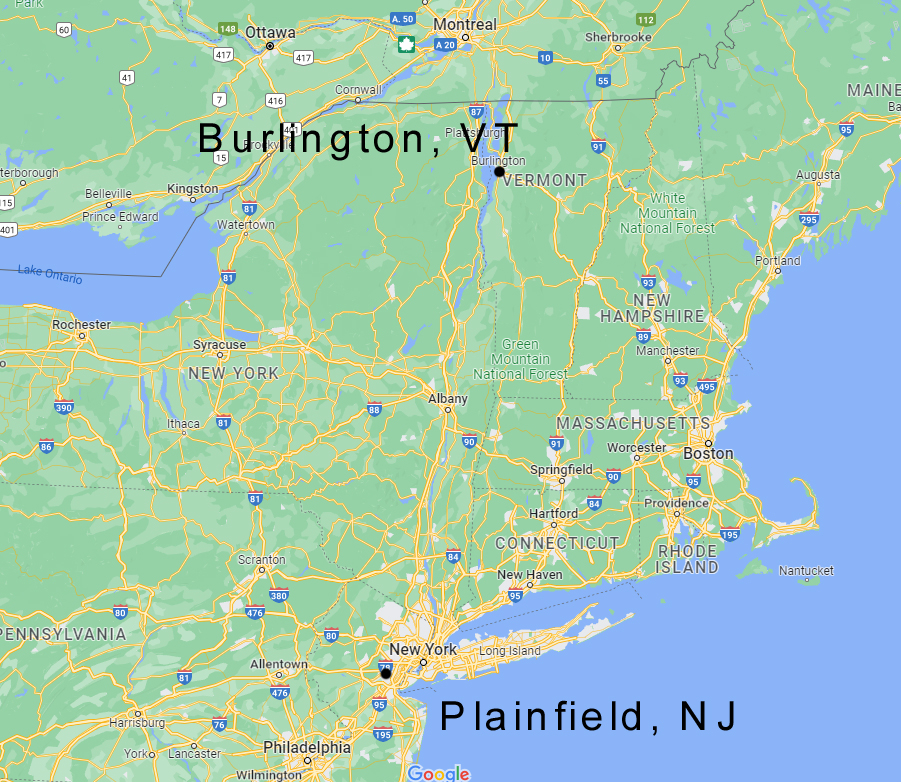
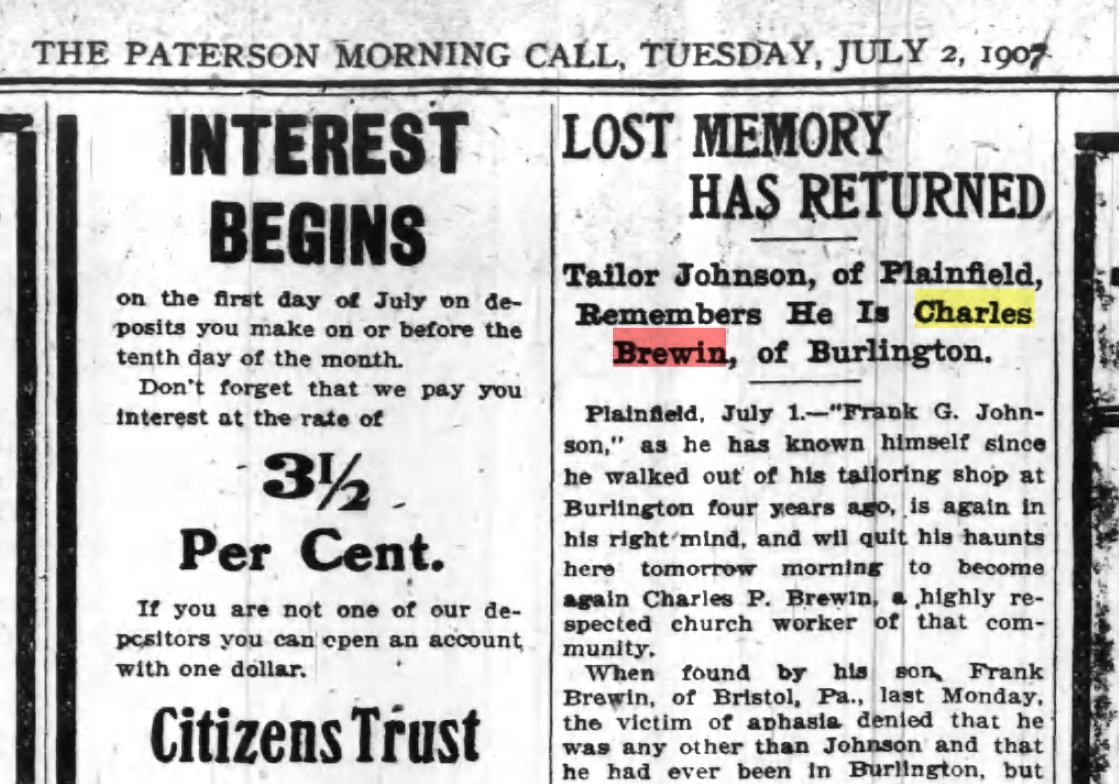
 On 9th November 1903, a civil war veteran and tailor, Charles Brewin walked out of his house in Burlington New Jersey and disappeared. Police searches extended all the way to New York after a hat and note with his name on it were found on a New Jersey ferry but were unsuccessful in solving the mystery.

About a year and a half later, a man named Frank Johnson arrived in Plainfield, Vermont from New York and found employment and lodgings. He was a quiet man, a churchgoer and entirely unremarkable.

Then on the 24th or 25th June 1907 a trolley conductor named Alfred Woolman was in Plainfield when he saw a man he recognised as Charles Brewin on his trolley car. But when he addressed him, the man insisted he was called Frank Johnson and knew nothing of any Charles Brewin, and swiftly left the trolley.

Woolman went to get Brewin’s brother and son and they returned to Plainfield where they found Brewin/Johnson again and tried to persuade him that he was Charles Brewin. But Frank was adamant and they failed to change his mind.


This encounter was described in a local paper where a friend of Frank Johnson, Dr Buchanan, took particular note of it. His father, Mr Buchanan was a chaplain in Burlington and he thought his father might know Charles Brewin. And then, on June 30th, he got a call from Johnson’s landlady Mrs Dunn to come at once: her tenant had woken up saying his name was Charles Brewin and he didn’t know where he was, apparently under the impression that he’d left Burlington the previous day.


He went at once, with his father, and found the gentleman in question pale and weak but otherwise fine, now answering to the name of Brewin and seemingly having no memory of the past four years. Brewin and Mr Buchanan did know each other and he was later reunited with his family and, initially, returned to Burlington. After a little over a week, he and his family moved back to Plainfield and returned to the job he’d held previously when he was Frank Johnson.


That was a brief summary of the case as described by James Hyslop in 1913, vol 7, no 4 of the Journal of the American Society for Psychical Research. There are some contemporary newspaper articles that paint a slightly different picture (ie, that Brewin’s memory returned while he was in hospital) but the number of witnesses Hyslop spoke to lends it the most credibility.

It’s a curious and fascinating case but why would a psychiatric case be written up in a psychical journal?

Hyslop had a theory that episodes like these (and he’d collected about five or six) weren’t the result of internal mental processes but external psychic influences. He went to great lengths to check those few details of Frank Johnson’s pre-1915 history. Each fact: former employees, pastors of churches he attended, even the existence of Johnson’s sister, Anne, for whom he had life insurance had no basis in reality, and did not even have parallels to Brewin’s life apart from them having the same date of birth (22nd February) albeit on different years.

Hyslop had hoped to use hypnosis to try and unlock the secrets of Brewin/Johnson’s missing years but Brewin’s doctor (not Dr Buchanan) wouldn’t allow it. As such, after Hyslop had exhausted his attempts at tracking down Frank Johnson’s life in New York, he finished his research and wrote up his findings.

Perhaps the most interesting aspect for me is the strange dreams he had while he was Frank Johnson. He would often tell his manager, Miss Mary Brown, about these dreams and she recalled that some of them had prophetic qualities.

Hyslop wrote “He [Brewin] frequently told of his dreams of this kind [ie, predictive], but Miss Brown and her niece could remember clearly only the two mentioned, and one more recalled a little later.” and he summarises two of these such dreams…

"On the morning of the fire in the dyeing establishment he told Miss Brown of a dream that he had the night previous.

This he told before the fire occurred. It was that she had a fire in the store and that she was almost burned to death. Such a fire did occur that day and Mr. Johnson rescued Miss Brown who would have otherwise been burned to death. Miss Brown showed me the scars on her arm caused by the fire."

And…

"At another time they had sent a fur coat home after repairing it. The owner complained that the lining was in tatters when it came back. Miss Brown and Mr. Johnson did not understand it, and the coat was brought back.

He then dreamed that he took the coat to New York, went up an elevator, saw a little short man, and was told by him that the skins for the lining were not the right kind.

He then said he would take the coat to New York, which he did the next day, and met the man he had seen in his dream and went through the scenes of the dream itself."

It’s an interesting question: What does a man who doesn’t exist dream about? I could be poetic and suggest that, with no past to dream about, Frank Johnson had to dream about the future, but the supporting evidence is scant. Two dreams in two years (in the third dream, Johnson described how his old boss had been injured and then a year later his business went bankrupt – not very compelling) would not be worth much were it not for Miss Brown mentioning that it frequently happened.

I’ve been trying to find a more recent case of a sustained second personality with no luck. If anyone knows of one, or if they know what the more modern terminology for a case like this is (“double consciousness” doesn’t seem to be in current usage) please leave a comment.

References:

Hyslop, J. (1913), A Case of Secondary Personality, Journal of the Society for Psychical Research, v7, n4, p 201-229
“Lost Memory Has Returned,” The Paterson Morning Call, Tuesday, 2nd July 1907, p2
“Brewin is Back In Plainfield,” The Paterson Morning Call, Tuesday 9th July 1907, p1

newspapers found on Fulton Post Cards
I’m not sure but I think you need a US/Canadian IP to access this.

Tuesday, 5 July 2022

Remote viewing the Iranian Hostage Crisis 1979-81

 Background

The Iranian Hostage Crisis began on 4 November 1979 and was initially an anti-US demonstration in the Iranian capital of Tehran. Students, angry at the US agreeing to give medical treatment to the deposed and exiled Shah of Iran, occupied the grounds and buildings of the US Embassy, holding the staff there hostage.


This was not the first such demonstration in Iran that year and, although the US authorities were angry at the situation, it was assumed that it would only last a few days at most. However, when the Ayatollah Khomeni praised the actions of the students, it became something more important and the occupation continued, with 52 hostages being held for 444 days.


The remote viewing project, then called Grill Flame, began work on the hostage crisis within a month and continued to work on it for almost all of the time that Americans were in captivity: the last session is dated 13 January 1981 and the hostages were released one week later.


I wrote a book about the entire crisis called America’s Imaginary Hostage Crisis so if you’re interested in a deep dive into the data, then this is definitely recommended…


But for this blog, I’d like to assess the claims of success that you often see reported in articles or books.


The first is Joe’s recalling of the team being called into a special session on the day the occupation began.


The beginning of the crisis


In the early part of November 1979, I received a call at 4:00 A.M. asking me to report directly to the office [...] So, I arrived not knowing that the American Embassy located in Tehran, Iran, had been invaded by Iranian revolutionaries. It was still dark when all six permanent and part-time remote viewers joined the operations officer, Fred, in the office. He said it was going to sound like a strange request, but that a number of Americans had been taken hostage in a location overseas, and they needed our help in identifying them. He then threw a pile of a more than a hundred photographs onto the tabletop—tell us which are the hostages and which are not. He left the room and left us to the problem.


McMoneagle, Joseph. The Stargate Chronicles: Memoirs of a Psychic Spy: The Remarkable Life of U.S. Government Remote Viewer 001 . Crossroad Press. Kindle Edition. 


Occasionally he recounts this story in talks and presentations, sometimes with the addition that he got it 100% correct.


The story is problematic for a couple of reasons. First, the US authorities knew exactly who was on the US embassy compound at the time the Iranians took over. Indeed, embassy staff in Tehran were calling Washington to keep the US government informed as the Iranians were arriving. Secondly, as mentioned before, this had happened before (in February 1979 the US  Embassy had been occupied in an almost identical event) so the initial reaction to the actions of the students was not one of panic. The US authorities were confident that, after the students had been given some publicity, the Iranian police would move in and clear the compound.


So there’s no reason for an early morning session as described. It doesn’t exist in the declassified articles, nor is it included in lists of sessions or summaries of notable events. So it was either totally unofficial, not even sanctioned by the Grill Flame management, or it didn’t happen at all.


Operation Eagle Claw


Often in articles regarding Grill Flame and the hostage crisis, their role in the operation to rescue the hostages is mentioned. This military plan called Operation Eagle Claw took place in late April 1980, at a time when all of the hostages were still held in the embassy compound.


On 23 April, the remote viewing team were ordered to leave the Fort Meade site, where they were based, and move into three rooms booked in the Best Western Motel. For the next two days they’d run a grueling series of sessions targeted at different parts of the Embassy: twenty sessions in under forty hours.


The army operation taking place in Iran at this time ended in tragedy. Faulty equipment meant the mission was aborted and then, as they were about to return, a sandstorm whipped up and in the ensuing confusion, a helicopter crashed into a plane and eight servicemen died while the rest retreated back to safety.


During the session at the motel, two remote viewers reported seeing something violent. On 24 April at 4pm, Fern described a “quick raid” while describing the Deputy Chief Mission Residence (area I).


“[..] Report the activity as two o’clock in the morning.”

“It’s one of complete mayhem.”

“Tell me what makes you say that.”

“I don’t know.”

“Report the raw imagery to me.”

“People scurrying. Guards scurrying from their cots.”

“Go on.”

“Just a quick impression of a very foreboding quick action.”

“All right. Move in time again one more hour in the future. Three o’clock in the morning. Three o’clock in the morning.”

“I can’t get rid of this imagery of a quick raid.”


Endersby, “America’s Imaginary Hostage Crisis” p98, Kindle


And the second example is often credited to Nancy Stern although it was actually Hartleigh Trent who conducted session CCC84. In her book “Phenomenon” Annie Jacobson writes:


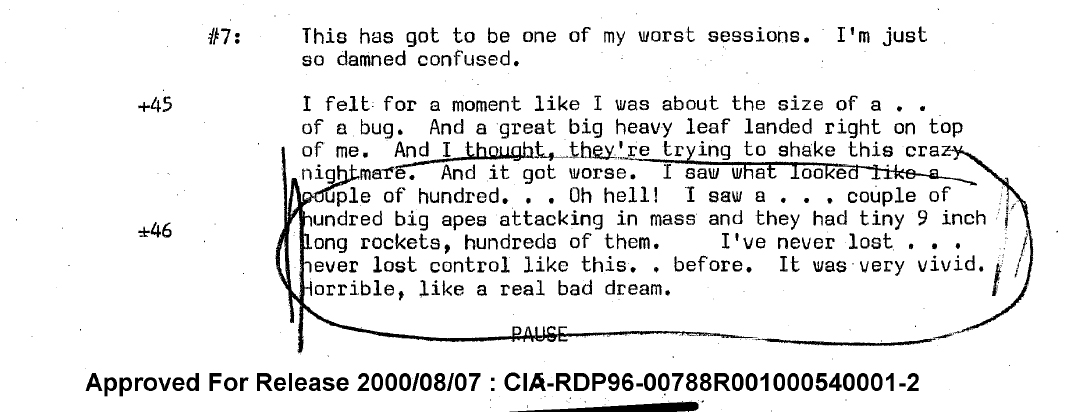
Declassified documents indicate that on April 24, 1980, Nancy S. was conducting Remote Viewing (RV) Session CCC84 when she broke down. The tasker noted, “Admin note 0300 Hours in Iran,” or at 3:00 a.m. local time, Nancy S. reported she was having trouble getting the target she’d been sent to, which was a building in Tehran code-named India. Instead, she said she saw “an attacking force of some kind.” She apologized and stated that perhaps she was “hallucinating.” What she saw was “weird and illogical” but “very vivid, horrible. Like a bad dream…” Her descripion was of “Big chest, big big gorillas. Great big chest beating gorilla leading these apes… they had tiny 9 inch long rockets, hundreds of them.” She apologized again and said she’d “never lost control like this before.” 


Putting to one side any confusion between Nancy or Hartleigh, the fact is that the remote viewing sessions had twice described violent or disturbing scenes. But this was because they weren’t blind to the target, nor to the aims of Operation Eagle Claw. They’d been fully briefed on the topic and so it is not surprising that scenes of armed exchanges would be reported. It’s worth noting, however, that the US forces retreated long before any chance at engaging with enemy troops could take place.


The news about the tragic end of Operation Eagle Claw broke during two sessions being run simultaneously. Both were cut short as the remote viewing team were brought together to watch the TV news. According to McMoneagle, Nancy was deeply upset at this and, in fact, she soon left the team and would never complete another remote viewing session.


Richard Queen


The next most famous claim concerns Keith Harary’s description of a session he undertook in July 1980.


I received an urgent morning call asking me to report to SRI. I met with a tall, expressionless man who served me a cup of hot coffee before we retired to the white room and got to work.


"We have a person who needs a description," the monitor said, offering me not a clue. Though I hardly understood the process, the question triggered a cascade of impressions about a person in a debilitated state of health. "He seems to be suffering from nausea," I said. "One side of his body seems damaged or hurt." I wondered whether the person I was describing might be some business person or a head of state.


"Where will he be in the next few days?" the monitor asked, again without inflection. I suddenly felt the sensation of sitting on an airplane that was taking off.


"On an airplane," I said.


The target turned out to be the hostage Richard Queen, held by Iranian militants and now desperately ill with multiple sclerosis that affected his nerves on one side. In part due to my input, I was later informed by contacts at SRI, President Carter dispatched a plane to bring Queen home.


https://www.psychologytoday.com/gb/articles/200411/confessions-star-psychic


Keith Harary was working for SRI in July 1980 and he had recently run a number of sessions against the Hostage Crisis. But SRI work focused on the hostages is largely missing from the declassified archives. Any contemporary notes from this particular session targeting Richard Queen are absent, possibly because it wasn’t part of the Grill Flame Project. The first time it is mentioned is in 1983, in an overview of the Grill Flame project when it is listed among a number of “successful viewings for the DoD/intelligence community”. But there are no further details. And Harary himself has issues with how psychic his vision had been.


“Were my impressions psychic? The hostages had been flooding the news for months.


Reports about Queen's health problems, including the issue of "a lame shoulder," had been in the news as well. I don't know whether such reports infiltrated my unconscious without my realizing it, but it would make sense to consider that possibility before the paranormal alternative.

https://www.psychologytoday.com/gb/articles/200411/confessions-star-psychic


Conclusion


Ultimately, the efforts of the remote viewing team were not well-received and a report written after the crisis was over stated:


“Comparison of the reports with returnee debriefings revealed a very low correlation between actual hostage locations/ conditions and inferences drawn from Grill Reporting. Only seven reports could be positively correlated with actual location or condition. Approximately 59

reports revealed a possible or partial correlation.

However, these same reports often included erroneous data. Sixteen reports contained inconclusive data making correlation highly subjective. Eight reports were noted as being poor from an administrative/ procedural standpoint and therefore being of no value. One hundred and twelve reports were found to be entirely incorrect.”


https://archive.org/details/CIA-RDP96-00788R001000340002-3


So, how much of the data produced by Grill Flame was used operationally? None. The  entire project had been for training purposes, something that the remote viewers were not aware of. But by now, despite the results, Grill Flame had other projects to work on and it seems that simply being involved in the Hostage Crisis had raised its profile and secured its funding for another few years, at least.


Friday, 20 May 2022

Remote viewing the hostage William F Buckley 1984

Those connected with the US government sponsored remote viewing project during the 1980s often speak about their work on hostage crises. General Dozier, The Iranian Hostage Crisis and LTC Higgins are frequently cited as high-profile cases that the US intel agencies asked for help with.

But one name is rarely mentioned: William Buckley. He was a US Army office and CIA Station Chief who was abducted from Lebanon and the remote viewing team were assigned to it as part of a massive CIA-wide drive to find Buckley and rescue him.

But Buckley was never found. He was tortured and died after a year in captivity in the most harrowing circumstances. The remote viewing team worked on his case for about one month before dropping it due to insufficient new leads to work from.

William Buckley was abducted on the morning of 16th March 1984 from the basement car park of the Al-Manara apartment block where he lived in Beirut. He was hit on the back of the head with suitcase full of rocks and bundled into a white Renault. After this, his exact whereabouts are never properly established.

Given Buckley’s importance and the top secret documents he’d been carrying at the time, the Director of the CIA, William Casey, took a personal interest in the search for him, insisting that every resource be used.

The remote viewers, working under the project name Center Lane, were assigned to this case. They got the commission on Tuesday 20th March 1984 and the first sessions were run the following day. Joe McMoneagle worked on both sessions that day. The report of the session emphasises that RVer described a kidnapping without knowing the target, as evidence that Joe was on target. However, Joe was told to concentrate on a specific set of geographical coordinates on a specific date, 16 March 1984. This would have been enough to tell Joe who and what the target was, especially since Center Lane had already run a number of informal sessions targeting Buckley. In the Stargate Archive, there are a couple of documents containing handwritten notes dated 16 and 17 March which describe those sessions. On one, the RVer writes William’s Buckley name and date and place of birth. Clearly the team were familiar enough with the abduction that even the slightest reference would be enough to help them recognise the subject matter. Suffice to say that none of the remote viewers taking part in this project was truly blind to the target.


From a report written on 13 April 1984 emphasising 
how the first session was run blind.

McMoneagle’s description of the kidnapping on this day is wrong (he has Buckley getting into a black car parked in the street, not being knocked out in a basement car park) although in the second session, after Joe had been shown a photo of Buckley, McMoneagle says that Buckley’s health is poor.

The following week, the remote viewer Tom did a session (during which a reference was made to “yesterday’s session,” but I can’t find a copy of that in the archive). He was given a map of Beirut as cueing material. This would have been enough to tell him the target of the session. He drew a building connected to the abduction, but didn’t specify which city the building was in.

Further sessions were undertaken into April, with little progress. Potential locations were described and drawn, but never named or placed on maps.

Then on 20th April, something quite unexpected happened. Something that demonstrates how serious the CIA were in bringing in every possible resource on this project: Uri Geller was hired to do a session. At least, I strongly suspect he was. The name of the RVer is redacted, but it contains six characters. Mind you, this means the interviewer (#66) calls him “Geller” which seems a little abrupt to me. On the other hand, this mystery psychic also mentions that he knows Arabic and he calls the Lebanon “my backyard”. Plus, some of the exchanges between the two seem very Geller-esque.


The session notes are quite unlike the usual military notes. This remote viewer rambles and asks questions and, midway through, asks if he can be alone in the room while he tries to locate Buckley, communicating with the interviewer via the intercom. The interviewer is quite happy to answer any questions and the RVer gives out words in Arabic, often asking “do you recognise that” without giving a context. The notes last for 71 pages, which is also much longer than a usual session, perhaps because they knew they wouldn’t be able to work with this person again. This is the last session run by Center Lane on William Buckley [1] and a report dated 14 May 1984 summarised the sessions while mentioning that the information from the remote viewers had been passed to the CIA.


On 7 May the US Embassy in Athens was given a video tape of a silent recording showing Buckley, nude, being tortured. He showed signs of being drugged, tied up and he was blinking a lot, suggesting he was usually kept in darkness. This video, however, did not prompt further remote viewing. Then on 30 May, another video was released. This one had sound, and Buckley’s voice was slurred and his hands and legs shook.

Tom did another session one week after the second video. It contains the co-ordinates 33° 51’ 05” N, 30° 20’ 25” E but this is in the Mediterranean Sea, as far as I can tell. This doesn’t seem to have been part of the Center Lane project since there is a note beneath the co-ordinates reading “For Ingo to run” referring to the psychic Ingo Swann who was working for SRI at the time.


SRI, the non-military side of the remote viewing project, also showed an interest in this topic. In mid-July they ran three sessions. The first session put him 8.7 miles south of Beirut, in good health and not tortured. The second said he’d be released around 22 September. The third used a computer-controlled method of randomly cycling through areas of Lebanon until a user stopped it. This was done 50 times and the two most chosen areas were forwarded to the DIA.

After this, remote viewing on this case ceased. On 24 October a third video of Buckley was released. By now he was in a pathetic state, gibbering, drooling, and occasionally screaming. After this disturbing glance into his predicament, all info on Buckley ceased. In April 1985 the CIA tried to find out if it was possible to get him back as part of a prisoner swap, only to be told he had died.

The best guess for Buckley’s date of death is actually two months after that. A freed hostage, David Jacobson, had been held in the infamous “Beirut Hotel” where multiple hostages were kept and he thought Buckley was there too. "The man was an American. Of that I have no doubt. But he was in a very bad way, delirious and coughing. It was hard for me to make out what he was saying because I myself was hooded. Then, in the end there was just this long silence. After a while I heard the guards shouting in Arabic and then what sounded like a body being dragged away." Jacobson dates this event to 3 June 1985.

Looking at the tasks given to Center Lane from 1982-90 (at least, those I can identify), I can’t help but notice that they weren’t asked to remote view David Dodge, the first American to be taken hostage in the Lebanon in 1982, nor any of the hostages after Buckley until 1988 when LTC Higgins was abducted. I wonder if the poor results from the Iranian Hostage Crisis (which they remote viewed extensively) made Center Lane a less attractive proposition until a major push for intelligence gathering was undertaken, such as for Buckley and Higgins, and their advice was sought.

But the thing that I don’t understand is the reason given for ending the remote viewing project so soon. The aforementioned report from the 14 May, after mentioning how closely they were working with the CIA, concludes “No remote viewing interviews have been conducted on the Buckley case since 20 April because the ICLP [Inscom Center Lane Program] exhausted all current leads. Additional interviews will be conducted when the CIA provides information from other sources which needs to be confirmed or when additional EEI [Essential Elements of Information] are provided.”

But remote viewing was supposed to excel in just these circumstances: that it could get intel when otherwise there was nothing to work from. For the project to end its own involvement in the search for Buckley for those particular reasons strikes me as very odd, especially given that the information seemed to be treated seriously at the time. 


[1] Confusingly, the declassified archive contains handwritten notes from a session dated 24 April 1984, but the information contained is identical to the session conducted on the 20th.

References

Papers from the William Buckley project
https://archive.org/details/stargatefiles?query=8404

Including…

SRI sessions summary
https://archive.org/details/CIA-RDP96-00788R001900530024-9/mode/2up

Summary of Center Lane sessions
https://archive.org/details/CIA-RDP96-00788R001600510002-8/mode/2up